
A $325,000 home with 3.5% down means a loan amount of about $313,625 before financed upfront costs. At 6.5% versus 7.0% on a 30-year fixed, the principal-and-interest payment differs by roughly $101 a month – about $6,060 over five years. That is why a first time homebuyer mortgage guide should start with math, not slogans.
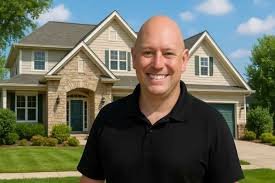
By Duane Buziak, Mortgage Maestro, NMLS#1110647
Buying your first home is usually less about finding one perfect loan and more about avoiding one expensive mismatch. The right mortgage depends on your credit score, cash reserves, debt-to-income ratio, property location, and how long you expect to keep the home. In Richmond, Henrico, Chesterfield, and Virginia Beach, where price points and taxes vary by county, those details can change the best answer fast.
What this first time homebuyer mortgage guide should help you decide
Most first-time buyers compare monthly payment first, but the smarter comparison is total cash needed, flexibility after closing, and how forgiving the loan is if your file is not perfectly clean. A loan with a lower down payment can still be the worse choice if monthly mortgage insurance lasts for years. A loan with a slightly higher rate can still win if seller credits cover more closing costs.
For local context, median listing prices commonly vary widely across Virginia markets. Richmond has often tracked in the upper $300,000s, while Henrico County and Chesterfield County can push higher depending on school district and inventory, and Charlottesville-Albemarle often runs materially above Richmond metro levels. Buyers near Short Pump or Midlothian usually face a different affordability equation than buyers in parts of Newport News or Roanoke. National housing portals such as https://www.realtor.com/ and https://www.zillow.com/ are useful for current county and city median trends, but your loan structure still determines whether the home is truly affordable.
The main loan options for first-time buyers
Conventional loans are often the best fit for buyers with solid credit and some cash. Many programs allow as little as 3% down for first-time buyers. A 620 score is a common floor, but pricing usually improves meaningfully at 680, 700, 740, and above. If you put less than 20% down, private mortgage insurance applies, yet unlike FHA, it can often be removed later when equity reaches the required level.
FHA loans are designed for flexibility. The standard minimum down payment is 3.5% with a 580 score, and some lenders permit lower scores with 10% down. FHA is often useful for buyers with higher debt ratios, limited credit depth, or past credit issues. The trade-off is mortgage insurance. FHA includes upfront mortgage insurance premium and ongoing annual mortgage insurance in most cases, which can keep the payment higher for longer. HUD publishes program guidance at https://www.hud.gov/.
VA loans are one of the strongest first-home programs available for eligible veterans, active-duty service members, and some surviving spouses. They can allow 0% down, no monthly mortgage insurance, and often competitive rates. Funding fees may apply unless exempt. Certificate of Eligibility and occupancy rules matter, and the property still has to appraise and meet VA standards. Official eligibility and program information is available at https://www.va.gov/housing-assistance/home-loans/.
USDA loans can also offer 0% down, but the home must be in an eligible area and household income limits apply. Many buyers assume USDA means farmland. In reality, some outer-ring suburban and rural-leaning areas near growing counties can qualify. For buyers looking beyond dense metro cores, USDA deserves a look.
First-time buyer loan comparison table
| Loan type | Typical minimum down | Common credit benchmark | Mortgage insurance | Best fit | Main trade-off | |—|—:|—:|—|—|—| | Conventional | 3% | 620+ | PMI if under 20% down | Strong credit, flexible pricing | Harder approval than FHA in thinner files | | FHA | 3.5% | 580+ | Upfront and monthly MIP | Lower credit or higher DTI | Mortgage insurance can last longer | | VA | 0% | No official VA minimum, lender overlays apply | No monthly MI | Eligible veterans and service members | Funding fee may apply | | USDA | 0% | Usually 640+ for smoother underwriting | Guarantee fee structure | Rural and some suburban buyers | Area and income restrictions |
How much cash you really need
Down payment is only part of the story. Closing costs often range from about 2% to 5% of the purchase price, depending on lender fees, title charges, taxes, insurance escrows, and whether discount points are paid. On a $350,000 purchase, that can mean roughly $7,000 to $17,500. Prepaids can swing the number higher or lower depending on tax season and homeowner’s insurance.
Reserves matter too, even when a program does not always require them. Many entry-level owner-occupied loans can close with little or no formal reserve requirement, but stronger files are easier to approve. For higher-balance conventional loans, multi-unit properties, or self-employed borrowers, underwriters may want 2 to 6 months of housing payments in reserve. Jumbo loans often require more.
For 2025, the baseline conforming loan limit in most areas is $806,500, with higher limits in designated high-cost counties. That matters because conforming pricing is usually more favorable than jumbo pricing, though the gap changes daily.
Credit scores: where approval and pricing split apart
A first-time buyer with a 620 score and another with a 760 score may both get approved, but they are not shopping the same mortgage. The lower-score borrower usually sees higher rates, higher mortgage insurance costs, or tighter debt-ratio tolerance. That can shrink purchasing power by tens of thousands of dollars.
If your score is below 680, small fixes can matter. Paying revolving balances down, correcting reporting errors, and avoiding new credit inquiries before closing can move the file from marginal to competitive. This is where soft-pull prequalification can help you shop without adding avoidable hard inquiries while you compare scenarios.
A practical 6-step roadmap
- Set a payment ceiling before you set a price ceiling. Use principal, interest, taxes, insurance, HOA dues, and mortgage insurance if applicable.
- Get prequalified with a soft credit pull if available. That gives you range without unnecessary score impact.
- Compare FHA, conventional, VA, and USDA side by side. Do not assume the lowest down payment is the cheapest long term.
- Review total cash to close, not just rate. Seller credits, lender credits, and points can change the best option.
- Lock the house and the numbers together. Taxes, insurance, condo fees, and appraisal results can change affordability.
- Keep your finances boring until closing. No new debt, no large undocumented deposits, and no job changes if avoidable.
First-time homebuyer mortgage guide for local Virginia buyers
In higher-demand areas such as Short Pump, Glen Allen, and parts of Midlothian, buyers often compete against stronger down payments, which can make conventional financing look cleaner to sellers than FHA, even when FHA is financially better for the buyer. In parts of Richmond, Chesterfield, and Prince William, appraisal gaps and seller concessions can become negotiation tools depending on inventory. Near Lake Anna or in more rural stretches of Caroline or Louisa, USDA eligibility may be worth checking if the property and income fit.
That is also where broker comparisons matter. Large retail lenders such as Rocket or Veterans United can offer convenience and strong brand recognition, while local and wholesale-access brokers may provide more flexibility on niche files, lower lender-paid compensation structures, or faster scenario testing across multiple investors. CapCenter can appeal to fee-conscious borrowers in some cases, but the right comparison is not just rate sheet to rate sheet. It is total cost, overlays, turn times, and whether the lender can handle your exact file type without surprises.
FAQs
What credit score do first-time homebuyers need?
A 620 score is common for conventional, 580 is common for FHA with 3.5% down, and VA has no official minimum though lender overlays apply.
Is FHA better than conventional for first-time buyers?
It depends. FHA is often easier to qualify for. Conventional can be cheaper over time if your credit is stronger and PMI is removable.
How much should I save before buying?
A useful target is your down payment plus 2% to 5% for closing costs and at least one emergency month of housing payment if possible.
Can I buy with little money down?
Yes. Conventional can go to 3% down, FHA to 3.5%, and VA and USDA can allow 0% down for eligible borrowers and properties.
Are mortgage rates the most important factor?
No. Rate matters, but loan type, mortgage insurance, lender fees, credits, and how long you will keep the loan all affect total cost.
Do first-time buyers need reserves?
Not always, but reserves strengthen the file. They become more important with larger balances, self-employment, or layered risk factors.
What should I avoid before closing?
Avoid new credit cards, auto loans, co-signing debt, major cash moves without documentation, and employment changes if possible.
This article is for educational purposes only and does not constitute financial or legal advice.
The right first mortgage should leave room for real life after closing – repairs, groceries, daycare, travel, and the surprise costs every house eventually brings. Duane Buziak, Mortgage Maestro | NMLS: 1110647 | Licensed VA/TN/GA/FL | VA Broker of the Year 2024-2025 | Top 1% Nationwide | Coast2Coast Mortgage | (804) 212-8663.